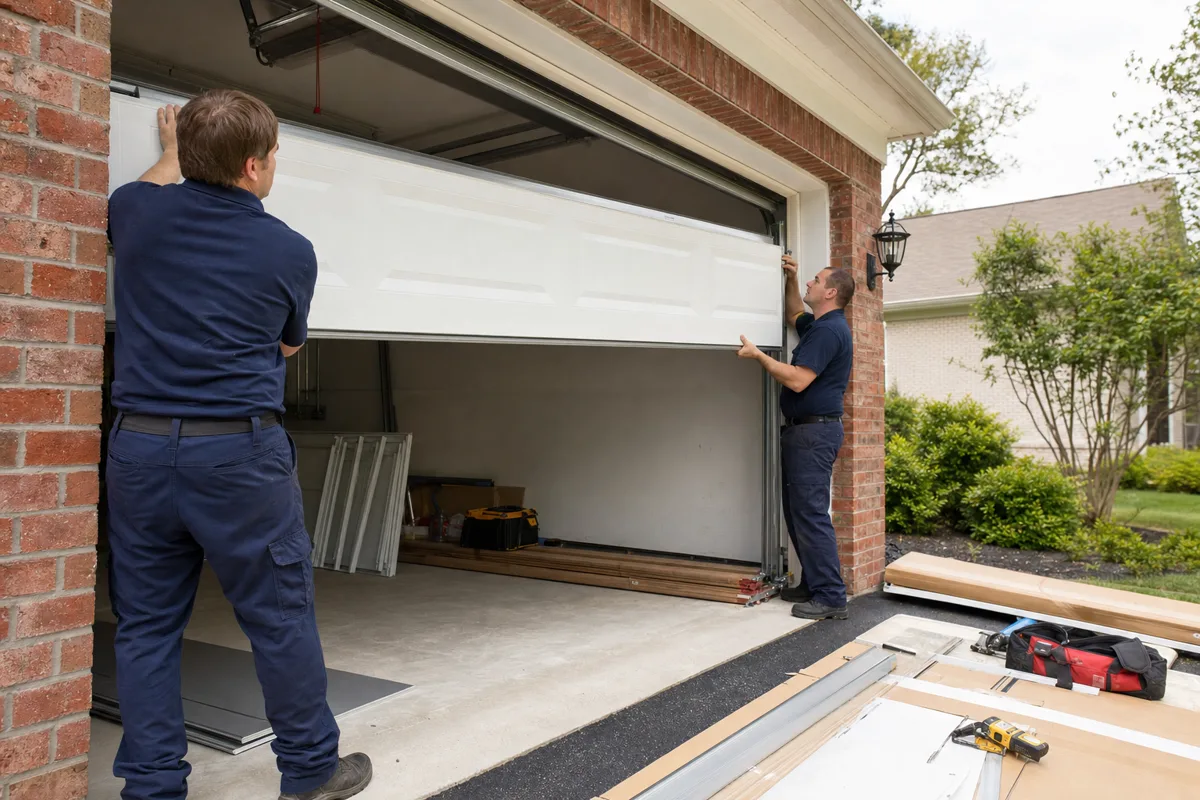

New Garage Door Installation
Replacement doors measured to the real opening, headroom and side room.
View detailsDented, split or rusted sections matched to the door already on the opening.
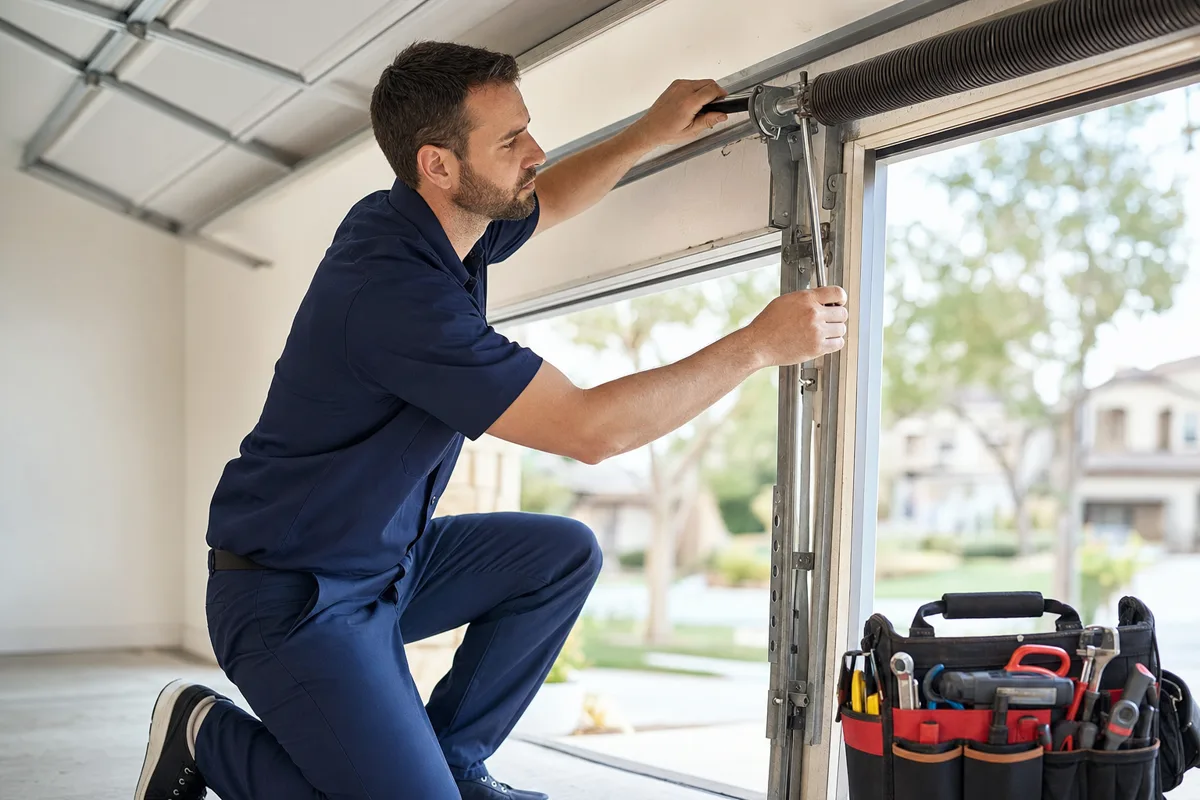
A sectional door is built from separate sections, which means damage to one does not always condemn the whole door. Panel replacement is the middle path between living with a dented, rusted or cracked section and paying for a full installation. Whether it is the right path depends on three things: whether the section can be matched, whether the rest of the door is sound, and whether the damage is cosmetic or structural.
A properly matched section should last as long as the rest of the door, which for a good insulated steel door means twenty years or more. The bottom section is the exception, because it lives in the wet, and giving it a decent seal, a threshold that drains away from the door and a rinse after the salt season is what buys extra years. Where a door has already had two or more sections replaced, the honest assessment is usually that the next repair should be a replacement door.
Our troubleshooting guides walk the diagnostic checks in order so you can confirm the fault before booking.
Short driveways, narrow approaches and tight laneway aprons make low-speed contact common, and steel sections dent easily even when nothing else is damaged. The question is always whether the section's internal stiffeners and end stiles are still straight, because those carry the load.
The bottom section spends the winter in contact with meltwater carrying road salt. Steel corrodes from the cut edge inward, so the lowest section typically fails years before the ones above it. This is the classic single-section replacement on older Hamilton garages, particularly in the east end and near the lake.
The door arm concentrates the opener's push and pull on one point of the top section. On thin or ageing doors that shows up as cracking or tearing around the bracket, and it needs a reinforcement strut as part of the fix rather than a replacement section on its own.
Wood and hardboard-faced doors in older Hamilton neighbourhoods absorb water at the bottom rail and delaminate. In the seven Heritage Conservation Districts, where appearance is reviewed against a district plan, matching an original profile becomes part of the repair conversation rather than an afterthought.
Hamilton has seven Heritage Conservation Districts, including Cross-Melville in Dundas, Durand-Markland, MacNab-Charles Street, Mill Street in Waterdown, St. Clair Avenue, St. Clair Boulevard and The Beach. Inside a district, exterior alterations are reviewed against the district plan, and a garage door facing the street counts as one. That makes panel profile, colour and glazing worth choosing deliberately, and it makes checking your property's status with the City's heritage resources a sensible first step before ordering.
Removing a section means interrupting the structure of a door that is under spring tension, which is why it is not a do-it-yourself job even though it looks like one. The door has to be supported before hinges come off, and a bottom section swap involves the bottom brackets, which are the fittings under cable tension. Never hammer out a dent while the door is hanging under tension, and do not leave a door in service with a cracked top section, because the opener arm can tear through it.
The manufacturer, model, gauge, panel profile, colour and glazing are identified so the replacement can be matched. Older and discontinued doors may need a compatible section rather than an identical one, and if the match will be visible you are told before anything is ordered.
The rest of the door is inspected: the other sections, hinges, end stiles, rollers and the counterbalance. If two or more sections are damaged, or the door is thin, uninsulated and near the end of its life, a full replacement is usually the better value and is presented as an option with the reason given.
The door is secured and spring tension managed, then the damaged section is removed with its hinges and hardware and the new section is fitted, squared and re-hinged. Hardware that was bent in the original incident is replaced rather than reused.
A new section can change the door's weight slightly, so the balance is checked and spring tension adjusted if needed. Seals are refitted, the door is cycled by hand and under power, and the photo eyes and contact reverse are tested before the visit ends.
Replacement doors measured to the real opening, headroom and side room.
View details
Broken torsion and extension springs swapped for correctly matched sets.
View details
Balance test, hardware torque, lubrication and a full safety-system check.
View detailsFill out the form and we'll confirm your appointment by email.
Garage Door Panel Replacement is available across every Hamilton neighbourhood inside the area below.
Map data © Google. Pin shows the service area, not a walk-in location — all work is done at your home.

A real callout, not stock imagery.
A sectional door pulled off its tracks, taken down and supported on site so it could be checked and re-hung safely — photographed on the job.